The Studio in a Single Link
Back in 2009, getting a professional-looking video interview onto your blog usually meant either arranging an in-person meeting or fighting through software that seemed designed to punish you for trying. David Lee had a different idea. His personal project, which he developed with co-founder James Lee and which eventually became the web service Wetoku, started from a straightforward question: what if being a video guest on someone’s blog required nothing more than clicking a link?
The name alone hints at the ambition. “Wetoku” is the Japanese pronunciation of “We Talk,” and the Seoul, South Korea-based team behind it, operating under a company called Zenitum, described their goal plainly: to “smash and bash technical barriers to creating compelling video content.” That phrasing has a bluntness that most corporate mission statements avoid, and it tells you exactly which problem they had in their sights.
The Friction of Remote Production
In the late 2000s, recording a remote interview was a multi-step ordeal for anyone on the receiving end. A guest typically needed to download dedicated software, create an account, configure audio input settings, and then hope nothing crashed before the session started. The platforms available at the time, including Livestream, Ustream, Justin.tv, and Skype, each came with their own setup requirements and learning curves.
The burden usually fell on the person being interviewed, not the host. A blogger might be comfortable with any of those tools, but their subject often wasn’t. By the time a guest had sorted out their microphone driver and clicked through an installation wizard, the momentum for the actual conversation had already drained away.
Wetoku was built around the premise that the guest should arrive at a conversation, not at a setup screen. Every design decision followed from that.
The Browser-Based Command Center
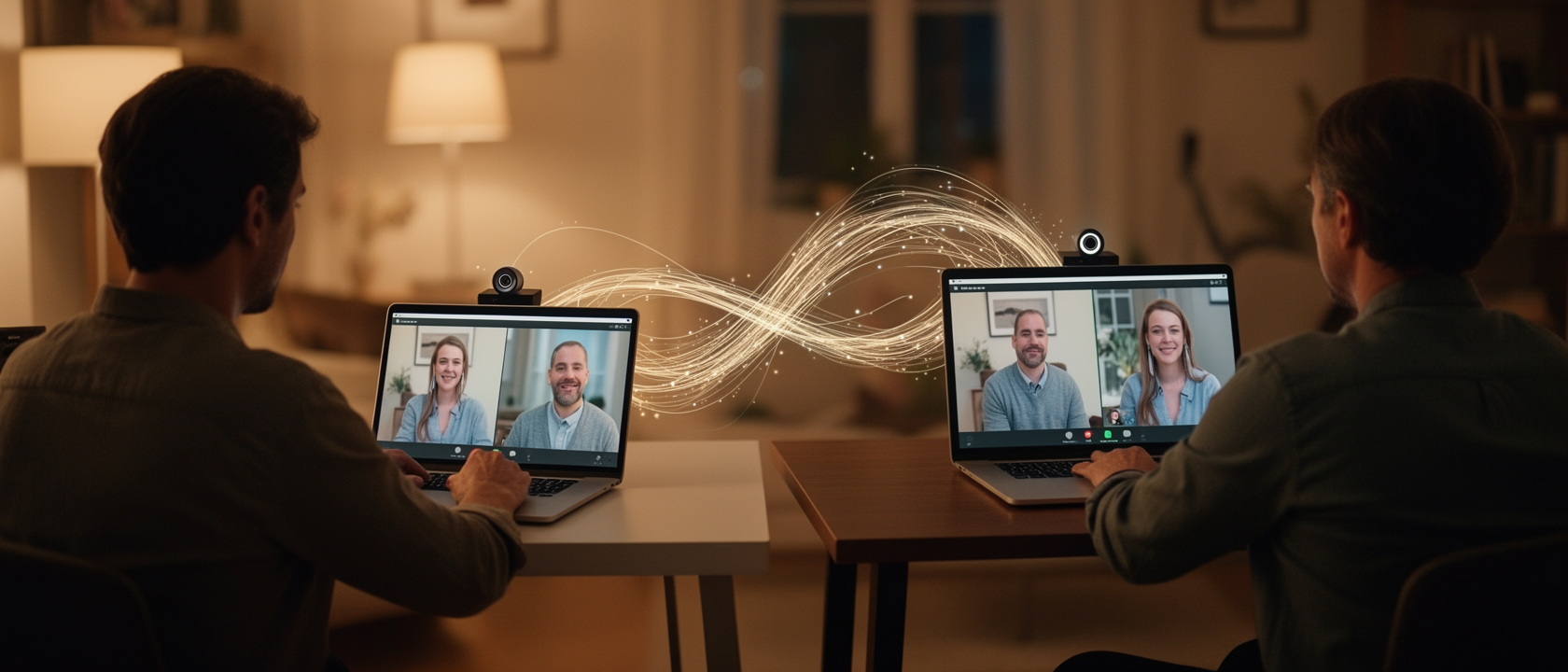
In practice, the process worked like this. The interviewer created a session on the Wetoku site and received a unique URL, which they sent to their guest by email. The guest clicked the link, connected their webcam, and was brought directly into a shared browser-based environment. No download required, no account to create on the guest’s side.
Once both participants were connected, the web page displayed their video feeds side by side. A built-in text chatbox sat alongside the video, so quick notes or links could be passed without interrupting the flow. The interviewer controlled the recording: a single button click captured the session. The guest didn’t need to manage any of that.
A webcam was the only hardware required, though the service recommended keeping a microphone close to the mouth and doing a short test beforehand to make sure both sides sounded balanced. After recording, the video could be embedded directly on a blog or website, showing both speakers in the same frame. Optional password protection was available for sessions that weren’t meant to be public.
That division of control kept the experience clean for both parties without leaving either one helpless. The interviewer held the record button; the guest just showed up and talked.
Putting the Theory into Practice
One of the clearer real-world demonstrations of what Wetoku could do came from Technorati’s State of the Blogosphere 2009 report. Eric Olsen, founder of Blogcritics.org, which he had sold to Technorati in August 2008, used Wetoku to conduct video interviews as part of that research, including an interview with the author of the Neatorama article that later covered the service. The report itself was released in October 2009 across five consecutive daily segments, drawing on a survey of 2,828 bloggers from 50 countries. Running video interviews through a browser link fit naturally into that kind of distributed, multi-participant project.
As of October 27, 2009, when the Neatorama article covering the service was published, Wetoku was still operating as a closed beta, accessible only through invite codes. It opened to the general public by August 2010 and went offline in early 2011.
What Wetoku demonstrated, briefly but clearly, was that the barrier to remote video wasn’t the technology itself. It was the setup process stacked on top of it. Strip away the installation steps, hand the guest a URL instead of instructions, and the webcam already sitting on a standard laptop turned out to be enough to capture a real conversation.