The Fish That Still Looks Dangerous Dead
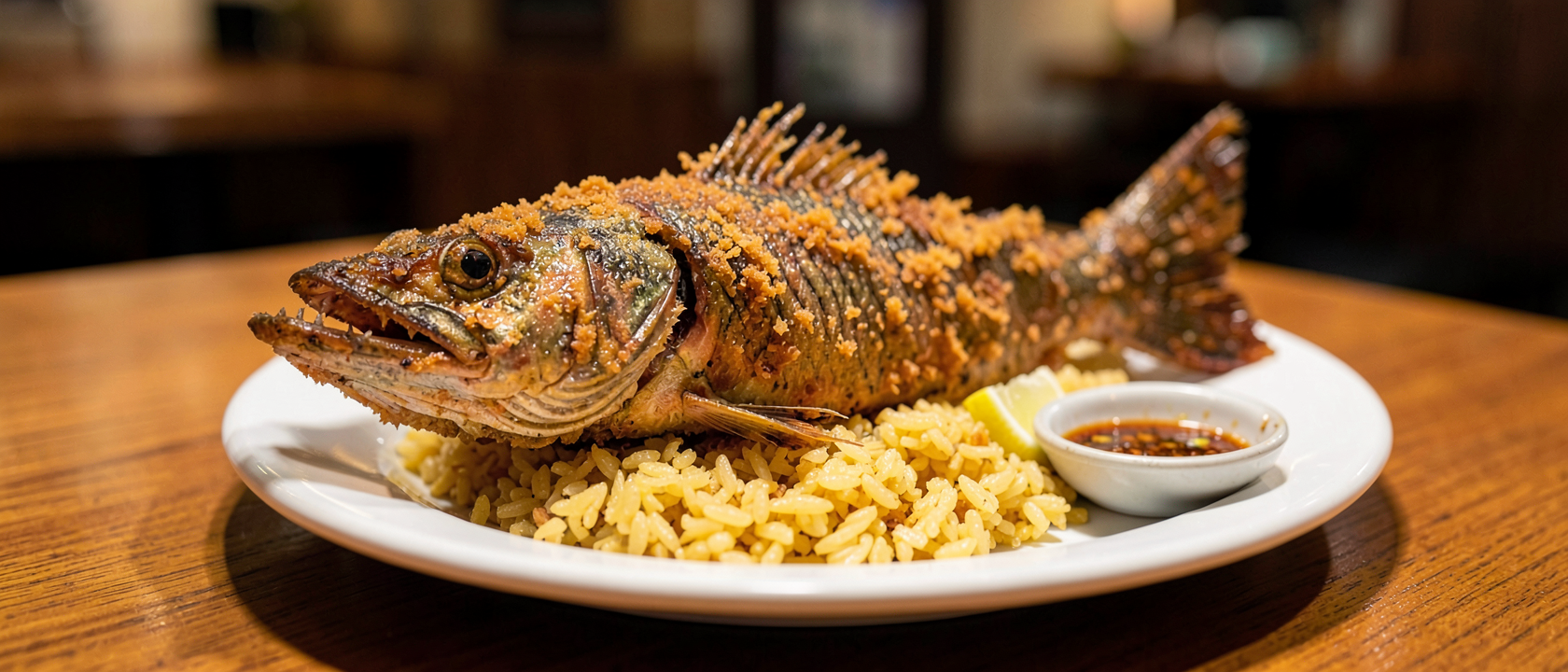
From March 15 through May 12, 2013, the Nara Kenko Land hotel in Nara, Japan, hosted an event called the “Big Amazon Mysterious Fish Exhibit.” Among its three featured dishes was something called “Pirania No Amazonesu”: a piranha, dusted lightly with flour, deep-fried, and served whole over rice pilaf. Whole, meaning the full fish, head on, mouth wide open, teeth arranged in what can only be described, on a china plate, as a grin.
The restaurant, named Heaven, sat on the second floor of the hotel. Staff served up to five of these plates per day, and according to a restaurant worker, the dish was “pretty popular,” with at least one person ordering it every day the exhibit ran.
By the time most people encounter a piranha in real life, the brain has already filed it under “dangerous”, years of horror films and nature documentaries see to that. The cooked specimen stares up through that open mouth, and some part of your instinct doesn’t fully update to account for the fact that it’s been fried. Knowing something can’t hurt you and feeling it are not always the same thing.
The Shaky-Hand Problem
Usagi Yumeno, a reporter for RocketNews24 (now SoraNews24), covered the dish in April 2013. She applied lemon juice before attempting a bite, and when she cut into the body, the smell that came out was enough to make her drop her cutlery entirely. The piranha on the plate was, at that point, as dangerous as any other piece of fried fish. Its teeth were inert: relics of what made the animal fearsome in water, now purely visual. None of that logic helped with what came next.
The Real Obstacle Has Nothing to Do With Teeth
The meat itself was slightly dark but flaky. The problem was the smell, strong, forcefully fishy, persistent enough that both lemon juice and an accompanying spiced dipping sauce became necessities rather than garnishes. When a smell is strong enough to send a reporter’s cutlery clattering to the table, it’s not a minor detail.
Fresh piranha should smell like freshwater fish. River fish from warm or stagnant water can develop a muddy odor naturally, but something pushing into rotten or ammonia-like territory usually means the fish is past its best. The smell Yumeno encountered fits that pattern, a possible freshness or storage issue rather than something intrinsic to the species. The original reporting doesn’t specify, so that stays a hypothesis, not a conclusion.
One Kitchen, One Smell, Or Is It?
Piranha flesh, by most accounts, has a light taste comparable to tilapia or sole. It’s bony, with relatively little meat for its size, but people across the Amazon basin eat it regularly, grilled, fried, stewed, in soup. That context suggests the smell isn’t always the defining feature. What happened at Nara Kenko Land may say more about the supply chain, a fish traveling from South America to a spa hotel restaurant in Japan, than about piranhas as food. The reporting doesn’t say, and nothing useful comes from guessing.
What the Movies Got Wrong (Sort Of)
The piranha’s film reputation runs on speed and teeth: schools of fish reducing a body to bone in seconds. That version is inflated. By some estimates there are more than 60 species across South American rivers and lakes, though scientists put the count anywhere from 30 to 60, with new species still turning up, and many are omnivores that eat seeds, fruit, and plant matter alongside fish and carrion. The black piranha holds a legitimate record: a bite force 30 times its own body weight, the strongest of any bony fish relative to size. But the group as a whole is not the relentless killing machine the films require. The name “piranha” means “tooth fish,” which at least points at something real. On a plate in Nara, those teeth are theater and nothing more.
What actually made Yumeno’s meal a challenge was nothing any horror film thought to script: a smell powerful enough to drop a fork, requiring lemon and a dipping sauce before the fish became remotely approachable. The real obstacle wasn’t the grin on the plate. It was everything that came with it.