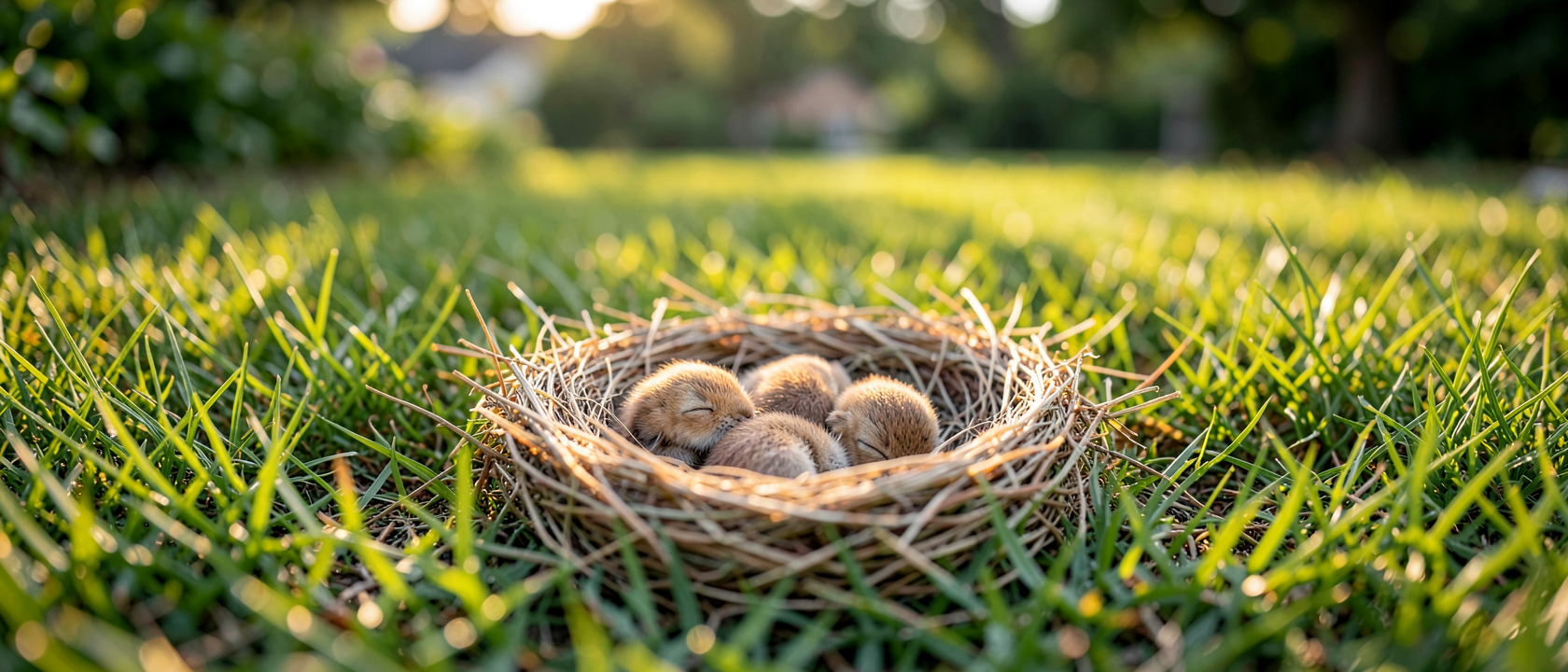
The Myth That Has Survived a Million Nature Walks
Chances are, an adult told you this when you were young: never touch a wild baby rabbit, because the mother will smell your scent and abandon or kill it. It gets taught at school, repeated in parks, passed between generations with total confidence. The belief is wrong. The specific mechanism everyone describes, human scent triggering maternal rejection, has no scientific support. What’s actually going on is more nuanced than a simple rule about hands and noses.
Where Did This Idea Even Come From?
The logic is easy to follow. Rabbits have sensitive noses. Predators leave scent. A mother catching a whiff of human on her babies must conclude something is wrong and cut her losses. It rhymes with how we picture animal instincts working, which is probably why it stuck.
The same story has circulated about birds for decades, and that version has been examined and debunked by fact-checking organizations. A discussion thread on Neatorama, published June 15, 2010 and sparked by a video of someone showing a wild rabbit nest to children, drew commenters who noticed both myths running on identical tracks: the logic is the same in both cases, and in neither is there evidence to back it up.
One plausible origin, cited by wildlife educators, is social. Adults wanting to stop children from handling wild animals landed on a consequence vivid enough to work. The message that the kit will die lands harder with a seven-year-old than a plain request to leave it alone, and the myth outlasted the original intention.
What Actually Causes a Mother Rabbit to Abandon Her Nest
Mother rabbits can and do abandon nests, and in some circumstances may cannibalize newborns, both behaviors are documented in wildlife literature. The real variables are stress level, prior breeding experience, degree of nest destruction, predator presence, and the doe’s own health. A doe that is repeatedly startled, or whose nest is significantly torn apart, faces a genuine risk calculation about whether the site is safe. A transient whiff of human hand does not register in that calculation.
Wild Eastern Cottontails (Sylvilagus floridanus) already live close to that edge. A mother visits her nest only twice a day, at dawn and dusk, spending roughly three to five minutes feeding her kits before covering them and disappearing, a deliberate camouflage strategy that looks like abandonment to human observers. The Humane Society recommends a practical check: lay an “X” of string across the nest, then look again after 10 to 12 hours. If the string has been disturbed, the mother came back.
Not All Kits Are Equal: Age Changes Everything
Scientific American has reported that rabbits show a somewhat higher tendency than some other mammals to abandon disturbed nests, but the mechanism is general stress and disruption, not a response to any specific odor.
Age matters considerably. Newborn kits arrive hairless, eyes sealed shut, and completely helpless; at that stage, maternal cannibalism under severe stress is a real possibility. But kits develop fast. Eyes open around 7 to 10 days after birth, and by 15 to 21 days kits begin leaving the nest on their own. First-year survival for wild baby rabbits sits at roughly 15%, reflecting predation and exposure far more than anything a passing human hand might contribute. The risk from brief contact is real but calibrated, and its source has been fundamentally misidentified for generations.
One More Thing: Rabbits Aren’t Rodents
Rabbits are not rodents. They belong to a separate order called Lagomorpha, shared with hares and pikas, a classification settled since the early twentieth century. Rodents and lagomorphs split into distinct evolutionary lineages long ago, a rabbit is genuinely no closer to a rat than the common phrasing suggests.
Cottontail kits leave the nest already nearly independent and still only about the size of a softball, small enough that they look helpless when they are not, and exposed enough that well-meaning people regularly scoop them up worried about the wrong thing entirely.